
Nike’s Wage Claims & Labor Practices Under Scrutiny by ProPublica
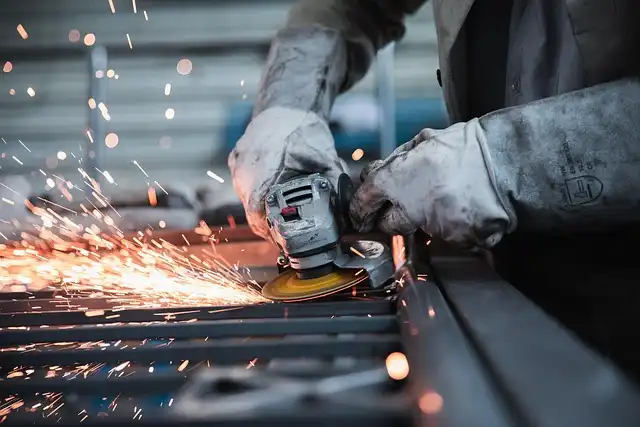
Nike faces scrutiny over claims of paying workers a living wage or double minimum wage. ProPublica investigations and employee accounts reveal actual wages are often closer to minimum, highlighting discrepancies in global pay data and challenging Nike's historical and current labor practice statements in countries like Indonesia and Cambodia.
Life on the Nike Factory Floor
A half hour later, on weekdays, she leaves for her job at the manufacturing facility. Over the following 8 hours, while her spouse minds the shop, she works standing, usually in sweltering problems, cutting material for 1,600 pairs of Nike sneakers– one every 18 seconds.
The very early protection consisted of a remarkable 1992 tale in Harper’s Publication that revealed the income of an Indonesian manufacturing facility employee that made $1.03 a day at the time and concluded she ‘d need to work more than 44,000 years to match Nike endorser Michael Jordan’s annual Nike earnings.
Nike’s Vision: Low-Cost Labor & Living Wage Claims
The business’s primary focus with wages is whether they’re high enough to cover fundamental costs and a little bit more, Cho claimed, a principle understood as a living wage. Nike has said 66% of employees at its distributors, at the very least those for whom it has information, make a living wage.
Living-wage calculations can vary extensively, and they don’t always match the assumptions of people on the ground. Employees interviewed near Jakarta, where the local minimal pay price is ostensibly greater than a living wage, claimed it’s inadequate to reside on.
In 1962, while working toward a master’s level in organization management at Stanford College, Knight created a scholastic paper that came to be the company’s basic organization plan. A core pillar: the disruptive power of affordable labor.
When Nike arrived in Indonesia in 1988, the country used a luring economic carrot to companies searching for overseas factories: a minimum wage around $1 a day in Jakarta, compared to $8 in South Korea, $14 in Taiwan and $33 in Tokyo, according to a 1988 U.S. State Department report.
Employees mainly concurred Nike agreement manufacturing facilities are more suitable to local choices. Nike factories are clean and pay on time, they said.
Investigations Challenge Nike’s Wage Promises
“Nike is not paying double the minimum wage,” claimed a union authorities in Central Java, a lower-wage area where Nike’s agreement factories have been expanding. Nike has said 66% of workers at its distributors, at the very least those for whom it has data, earn a living wage. In June of that year, Knight composed a letter to the editor of The New York Times claiming Nike “has paid, on average, double the minimal wage” to manufacturing facility workers. Nike’s Cho stated the business’s work to raise wages includes a program that’s assisted female workers advance right into higher-paid placements. Workers mostly concurred Nike contract factories are more suitable to regional options.
In 2014, a ProPublica press reporter went to Cambodia and located that only 1% of the 3,720 employees at a previous Nike provider earned at least 1.9 times the base pay, based upon a factory payroll journal. Meetings and paystubs for various other employees proved that incomes are normally closer to the base pay than double that quantity.
“We’re proud of the duty Nike and our market have played in building work, abilities, and chance in numerous nations, consisting of Vietnam today, where the industry adds meaningfully to national GDP,” the firm stated, including that it remained “devoted to promoting proceeded enhancement.”.
Knight when told docudrama filmmaker Michael Moore that factory jobs were such a roadway to upward mobility that somebody operating in an Indonesian manufacturing facility making Nike goods might one day be Moore’s property manager.
Sandra Cho, that supervises human rights for Nike, didn’t disagreement that some manufacturing facility workers– consisting of in Indonesia and Cambodia– earn less than 1.9 times the minimum wage, describing the number as a “global average.”.
Throughout Donald Trump’s second presidency, ProPublica will focus on the areas most looking for scrutiny. Below are a few of the problems our reporters will be enjoying– and how to contact them safely.
Corporate Responses and Historical Discrepancies
Nike said in a court filing, without admitting any one of its statements were unreliable, that those declarations were not subject to a court’s opinion regarding their veracity. The firm’s words were secured by the First Change, Nike created, since they were planned not to sell Nike products but to address Nike’s critics concerning “problems of public passion.”.
ProPublica is a nonprofit newsroom devoted to nonpartisan, evidence-based journalism that holds power answerable. Established in 2008 to address the decrease in investigatory reporting, we have actually spent over 15 years uncovering oppression, corruption, and misuse of power– job that is sluggish, costly and a lot more important than ever before to our democracy. With eight Pulitzer Prizes and reforms triggered in state and city governments, organizations, establishments and even more, our coverage ensures that the general public interest precedes.
In his book, he also covered the squashing destitution he saw on an around-the-world trip as a 24-year-old. Knight, that did not react to detailed concerns for this short article, composed in guide that hiring low-wage employees in developing nations would stimulate economic development.
As business ramped up manufacturing there, anti-sweatshop objections and adverse press accounts increased, with some noting the country’s minimum wage was so reduced that lots of factory workers were malnourished.
The company claimed it based the case on info from 103 “critical vendors” in 13 nations that employed over 700,000 employees. The report did not identify the distributors or divulge the incomes paid to workers.
Today, the risks are more than ever before. From values in our federal government workplaces, to reproductive health care, to the climate situation and beyond, ProPublica continues to be on the cutting edge of the stories that matter the majority of. Your present helps us keep the powerful accountable and the fact easily accessible.
Global Benchmarks and Worker Livelihoods
Nike rivals Adidas and Puma likewise create wage estimates for only a subset of their suppliers, but they have actually published information down to the country degree over the last few years. Adidas reports wage variations within countries. If they are not, supporters state the information aids employees establish whether they’re paid fairly and push for pay rises.
“Nike is not paying double the minimum wage,” stated a union official in Central Java, a lower-wage area where Nike’s agreement manufacturing facilities have been expanding. “The fact is the opposite. Nike is looking for cheaper employees.”.
You have to credit history ProPublica and any kind of co-reporting partners. You need to connect the word “ProPublica” to the original URL of the tale.
They resided in 150-square-foot barracks-style homes with practically no furniture with the exception of slim mattresses, which had actually been propped versus the wall to produce living area. Tiny electrical fans cooled down the apartment or condos, which set you back around $30 a month to lease.
In its 2024 annual record, Adidas said nearly 100,000 of its manufacturing facility employees in Indonesia made in between 1.1 and 1.4 times the minimum wage. Information from Puma’s 2024 sustainability report showed that employees at four Indonesian distributors averaged $208 in regular monthly incomes, 17% over the average minimum wage where the factories were located.
The Oregonian/OregonLive and ProPublica found lots to test the claim, including statements by the firm itself. Between 1994 and 2001, 4 records provided straight by Nike, done at the company’s demand or compiled by the United state federal government never ever put the average wage in Indonesia higher than 37% above the minimum.
“Bullshit,” a union authorities claimed, in English, while resting on a makeshift sofa on the porch of his workplace near Jakarta, the Indonesian capital. (Like many employees presently utilized by Nike suppliers, the official did not wish to be called as a result of concerns of retaliation, consisting of penalties and termination.).
Nike founder Phil Knight in March 1995. In the 1960s, Knight blogged about how low-wage labor can help Nike interfere with the shoe sector. 3 decades later, he boasted that the company’s Indonesian factories paid double the minimal wage.Najlah Feanny/Corbis by means of Getty Images.
The post was created in partnership with The Oregonian/OregonLive. ProPublica is a not-for-profit newsroom that checks out misuses of power. Register for Dispatches, an e-newsletter that highlights wrongdoing around the country, to receive our tales in your inbox every week.
The business claimed what matters more than what people are paid about the base pay is whether they make sufficient to cover fundamental expenses. Some areas of Indonesia, including Jakarta, have minimum wages higher than regional living wage quotes by the WageIndicator Foundation, an independent Dutch not-for-profit.
You can not edit our product, other than to reflect relative adjustments in location, editorial and time style. (As an example, “yesterday” can be transformed to “last week,” and “Rose city, Ore.” to “Portland” or “right here.”).
Provided with thorough inquiries regarding pay practices, Nike claimed looking at pay about the minimum in isolation “misses out on the more comprehensive picture of actual wage growth and financial development” in nations where Nike sources its items.
Inside a Nike factory worker’s home. Workers in Indonesia say they gain much less than what Nike claims is the standard amongst distributors for which it has adequate data.Adi Renaldi for The Oregonian/OregonLive.
It’s a case business founder Phil Knight initially made in the 1990s, when the firm faced accusations of factory problems in the overseas manufacturing facilities worked with to make Nike’s garments. And it’s one the tennis shoe giant has actually reasserted considering that 2021.
The workers’ accounts of earning minimum wage or a bit a lot more are consistent with 63 paystubs from 3 Indonesian factories, which The Oregonian/OregonLive and ProPublica obtained from a labor team. At two manufacturing facilities, employees averaged 1.1 times the base pay. At the various other factory, employees averaged 1.4 times the minimum.
The business’s international pay number is based on information for 700,000 of its roughly 1.2 million employees in its almost 700 contract manufacturing facilities. Nike does not disclose which manufacturing facilities, or which workers, are left out.
“Those statements were made nearly 30 years back, based upon the data and understanding readily available at the time, and showed a wider idea that responsible engagement in global profession could increase and raise incomes opportunity in arising economies,” Nike said in its 2026 statement. “Like the majority of firms, we do not preserve granular factory-level pay-roll information from companions in the mid-1990s.”.
Nike’s Cho said the business’s work to lift salaries consists of a program that’s assisted women employees advance right into higher-paid placements. About 80% of factory staff members are ladies, Cho stated, but males are 2.5 times more probable to get promoted off the production line. She said 21% of participants in the program got a promo within 3 months.
“Thirty years earlier, Nike shared that responsible participation in international production can accelerate financial growth in emerging economies,” Nike claimed in its statement. “History has mainly confirmed that.”.
If you’re republishing online, you have to link to the link of this story on propublica.org, consist of every one of the web links from our tale, including our e-newsletter register language and web link, and utilize our PixelPing tag.
When asked to resolve the inconsistent numbers from the 1990s, Nike said through e-mail: “What’s relevant today is just how Nike operates now, including the rigor of our present disclosures, the progression we’ve made, and the job still ahead to advance incomes and possibility throughout our supply chain.”.
Another employee estimated as high as 70% of her colleagues had second jobs, a comment that drew approving responds. That job includes running motorbike taxis, fish farming, gathering scrap metal and cleaning fruit, workers claimed. Some employees offer items inside the manufacturing facility, including coffee, treats and cosmetics, which they stated comes with the risk of corrective action, consisting of termination.
In 1996, Nike distributed a reality sheet that said the average wage in its Indonesian factories was $108.65 a month, or more than double the base pay. In June of that year, Knight composed a letter to the editor of The New york city Times stating Nike “has paid, typically, double the base pay” to factory workers. A month later, he told CNN Nike paid “over 2 times” the base pay in Indonesia. He informed investors in 1996 that pay was “double the minimum wage throughout Indonesia.”.
Given that the Kasky settlement, Nike has published nearly 2,000 pages of records on its job to end up being a far better corporate resident. The closest it came to losing brand-new light on earnings remained in 2021, when the business reported on brand-new initiatives to understand what factory employees make.
In Vietnam, Nike’s largest production facility, two employees told The Oregonian/OregonLive they made base pay– regarding $204 a month– however two claimed they made twice as much. That’s in keeping with records from Nike’s rival, Puma, which states its most significant manufacturing facilities in Vietnam pay around double the minimum wage.
When a press reporter for The Oregonian/OregonLive checked out the country and interviewed approximately 100 employees from greater than 10 factories that provide Nike, none said they made anywhere near twice the base pay.
1 Factory workers2 Labor practices
3 Living wage
4 Minimum wage discrepancy
5 Nike
6 ProPublica investigation
« NY Homeless Hotel Costs Soar, New Regulations Proposed for ServicesInvestigation: Illegal Hemp-Derived THC Found in Colorado Cannabis Dispensaries »